
By Caleb P. Goossen, Ph.D
I’ve had the privilege of discussing gardening with new growers for more years than I would like to admit, and a common hurdle is letting the perfect be the enemy of the “good enough.” While I want everyone to start with a soil test if possible, I recognize that many people will not, and also that costs beyond bare minimum essentials are simply too much for folks on tight budgets. There’s an entire gardening industry selling books, tools, and other supplies, which has created many narratives about what a new grower “needs,” what qualifies someone as a “real” gardener, and what constitutes growing the “right” way. I often suggest there are at least as many ways to grow as there are growers. The key is learning enough to understand what’s happening in the garden and which approaches best fit your goals. However, I recognize the best way to “just start” is often to follow a system that someone else has laid out, and so I have provided a blueprint to build off of. This advice is a starting point to help you begin — the real learning happens through doing.
Site Selection
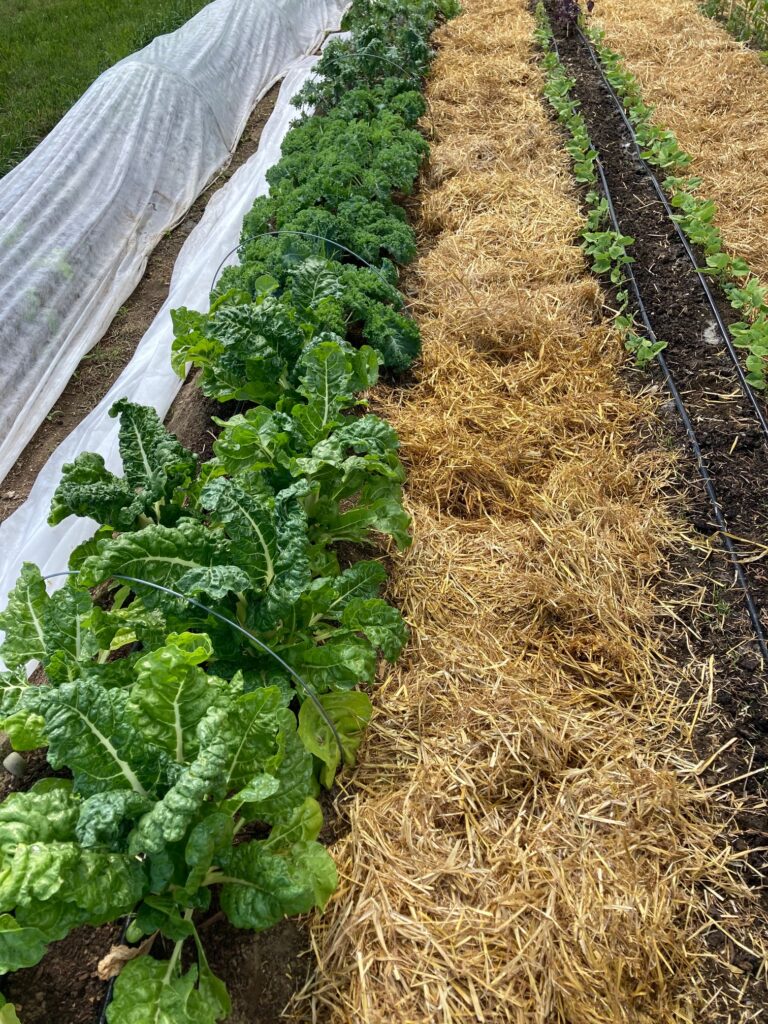
To the extent that it’s possible, choose a spot that gets full sun, or at least eight hours during a summer day without shadows landing on it. You will also want to be able to get water to it relatively easily. For many people, this may likely be a section of lawn.
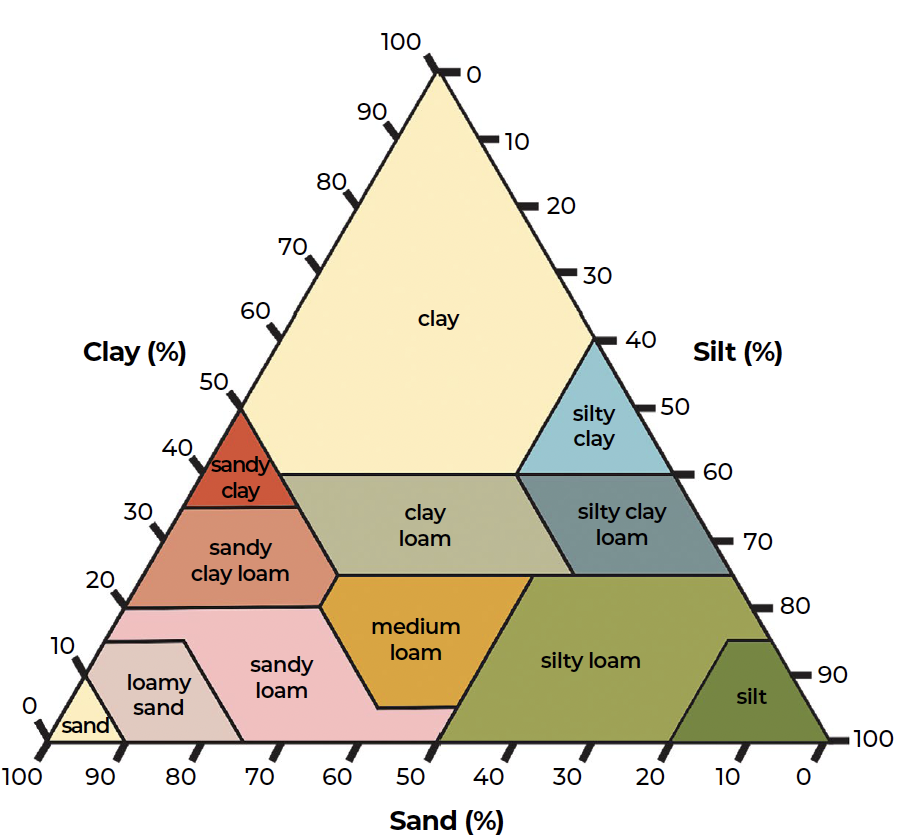
If you have more than one site to choose from, dig a hole at each location as soon as you can to evaluate the soil. More often than not, growing is easier, more successful, and more enjoyable the closer your soil is to being a “loam” or “fine sandy loam.” You want a mix of larger particles, like sand, that keep the soil loose enough to allow space for air, and for water to drain through, plus some smaller soil particles that shelter microbes needed for a healthy soil and provide a better hold on nutrients for your plants. You can grow on most any soil type that you have available to you, but the more it leans towards sandy (excessively drained) or clayey (doesn’t drain enough!) the more work, education, and inputs you may find yourself needing to get results that you’re happy with. It’s always easier to add water than it is to take it away, so steer towards better-draining soil when you have the choice. If your options are limited in terms of soil quality, I encourage you to plan a deeper dive into crop selection and soil health later on to figure out how best to “grow where you are planted.”
Soil Fertility and Nutrients
Before we talk about nutrients, we have to talk about soil pH. In short, pH is a measure of how “sweet” (basic, pH > 7) or “sour” (acidic, pH < 7) a soil is. Soil in New England is naturally “sour” in the vast majority of cases, so we typically want to raise it to a slightly acidic “sweet and sour” range (between 6 and 7) where vegetables can best take up nutrients in the soil or from soil amendments. Without a test, we are guessing the soil pH. Well-cared for lawn or hayfield may have been managed enough that pH is not as low as it would be naturally. The less management you expect to have taken place, or if you see acid-loving plants like blueberries thriving, the more you should expect to need to raise the pH. Wood ash from a clean source is a fantastic, and often free, soil amendment for raising pH and supplying plant nutrients at the same time. Wood ash comes with a risk of raising soil pH too high, however, and you could actually make plant nutrients less available if you over-apply it. The safer approach for raising pH is to use dolomitic lime. While lime contains fewer plant nutrients, it raises pH in a buffered manner, limiting how high it will go. Thirty pounds of lime per 1,000 square feet of new growing area is a relatively safe guess. It is best applied as far in advance of planting the garden as possible — lime takes time to raise pH and can sometimes interfere with fertilizers.
Without a soil test we’re also stuck guessing what nutrients need to be added to meet plants’ needs. Fortunately, many organic soil amendments are well balanced, meaning they have at least some of most of the nutrients that vegetables need to grow. Compost quality and nutrient content is highly variable (and hard to achieve from household piles), but a rule of thumb for starting a garden with well-made compost is to incorporate a two-inch layer. Animal manures may be inexpensive, or free if you find someone with excess, and can be applied at a similar rate of about 2 inches. However, uncomposted manure contains bacteria that could make you sick if you don’t incorporate it into the soil far enough in advance of harvesting vegetables — 90 or 120 days between incorporation and harvest, depending on whether the crop comes in contact with the soil (120 days) or not (90 days). Manures and composts add fresh organic matter, feeding microbes that make soil healthy.
If using a commercially available organic fertilizer instead of compost or manure, make sure it is “balanced,” in terms of nitrogen (N), phosphorus (P), and potassium (K). These are the nutrients needed in highest amounts by vegetable plants. Fertilizers are required to list NPK content, allowing you to see if those percentages are similar. Nitrogen is often the most limiting nutrient for organic gardens, and also changes the most in the soil, so you will want to use the N content of a fertilizer to determine how much to apply. A general-purpose fertilizer rate of 3 pounds nitrogen per 1,000 square feet of growing space is a good starting place. Divide the amount of nitrogen you want to apply, by the N percent of whatever fertilizer you’re using, and then multiply by 100. As an example, you would need 60 pounds of a fertilizer that contains 5% N to provide 3 pounds of nitrogen (3 lb. ÷ 5% N = 0.6 x 100 = 60 lb.). Instead of providing those 3 pounds of nitrogen all in one go, you should probably mix 2 pounds into the soil when you’re planting the garden, and “side dress” the last pound about four weeks later.
Whether your motivation is minimizing upfront costs or avoiding excessive pondering, I hope you feel equipped and confident enough to adopt a “good enough” approach to vegetable gardening, at least as a starting off point. As you prepare your garden space, you’ll begin the most effective gardening education of all — experience!
MOFGA’s Crop Specialist Caleb Goossen utilizes his background in plant and soil science to educate and assist organic farmers and gardeners.
This article was originally published in the spring 2026 issue of The Maine Organic Farmer & Gardener.