
An Interview with Marina Schauffler
Contamination of Maine farmland by per- and polyfluoroalkyl substances (PFAS) garnered mainstream media attention in 2019 when the Stone family publicly shared the tragic story of chemical contamination of their dairy farm. Contamination of additional farms, including several certified organic operations, came to light following the release of a map, by the Maine Department of Environmental Protection, showing hundreds of sites where permits had been issued for application of wastewater sludge. Unbeknownst to farmers, sludge spread as fertilizer contained a hazardous class of chemicals, dubbed “forever chemicals” due to their ability to persist in the environment, that can contaminate water and soil, as well as crops and livestock raised on contaminated land or with contaminated water.
While PFAS contamination is not isolated to Maine, the state has gained national recognition for its PFAS response, including mitigating further PFAS contamination by banning the practice of land-applying sludge, and addressing widespread exposure to PFAS through consumer products (such as cookware and cleaning products) by prohibiting sale and distribution of certain product categories that intentionally contain PFAS.
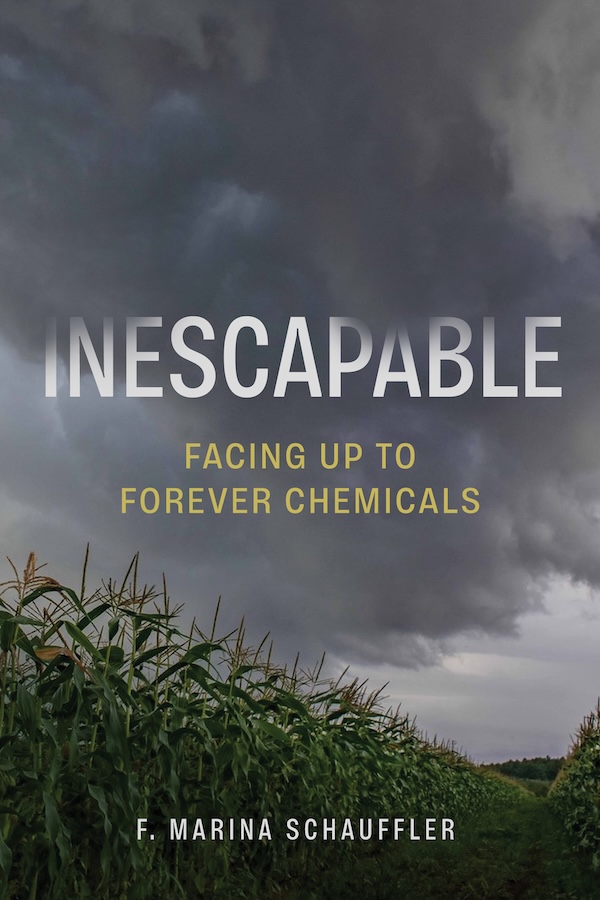
Maine-based environmental writer Marina Schauffler covered the unfolding public health crisis in the state — as well as the response by the legislature, farmers and impacted citizens, scientists, and organizations (including MOFGA) — for The Maine Monitor, Maine Morning Star, and elsewhere, and in her Substack newsletter, ContamiNation. This March, her in-depth reporting on the subject goes even deeper with the release of her second book, “Inescapable: Facing Up to Forever Chemicals.” Schauffler traces both the history of this environmental catastrophe and how the people and state of Maine are responding, in almost real time. She combines exhaustive research, seemingly endless interviews, and narrative prose to invite readers into the action; and importantly, she compels them to take action themselves.
I spoke with Marina prior to the release of “Inescapable,” and the following conversation has been edited for length and clarity.
– Holli Cederholm
Cederholm: What does the landscape of PFAS contamination in Maine look like today? And how does it compare to elsewhere?
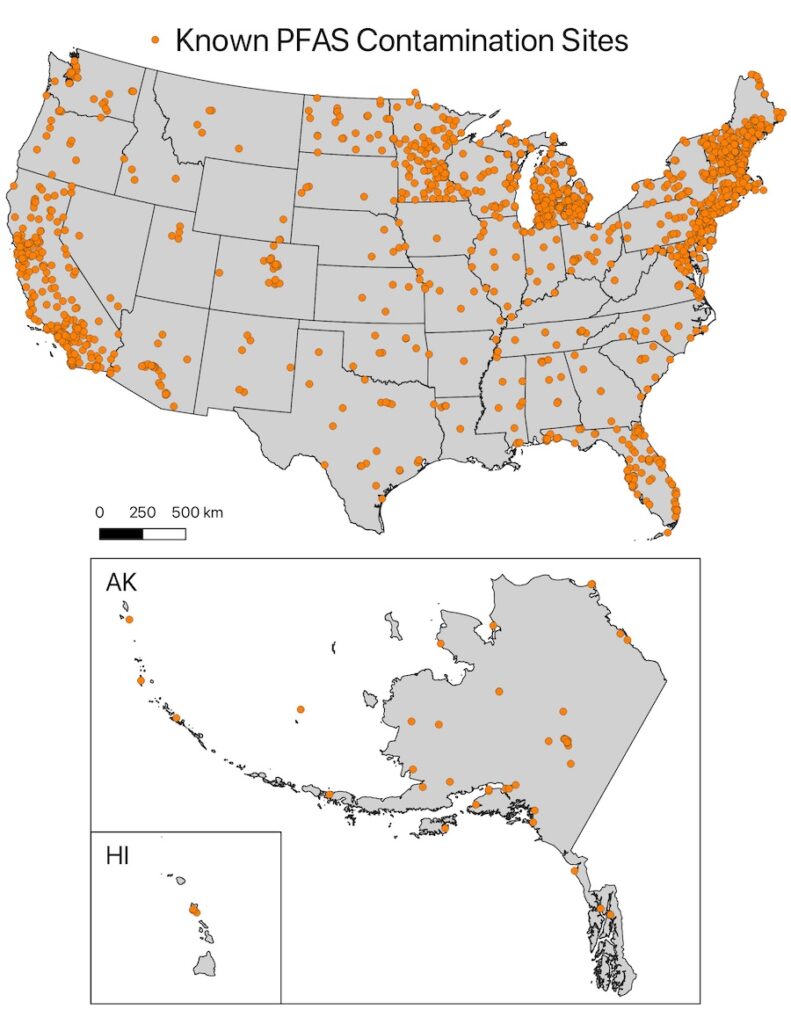
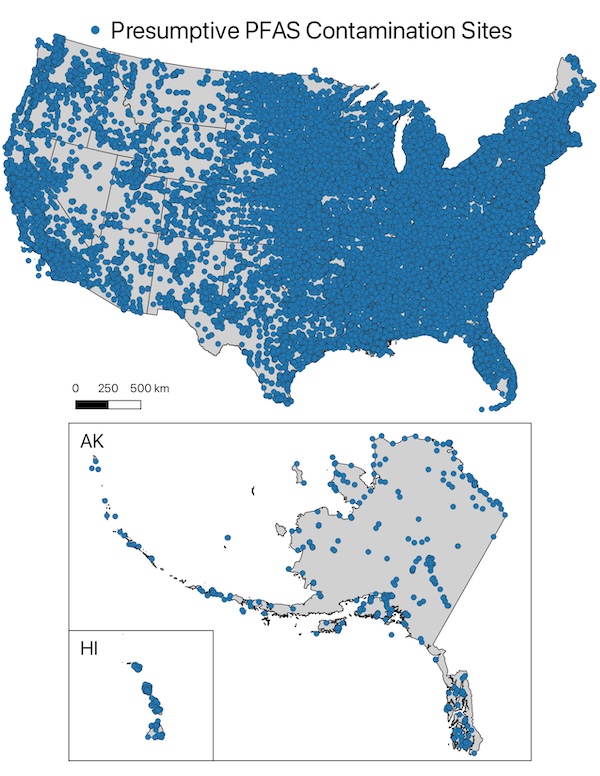
Schauffler: PFAS are ubiquitous in our world now, and Maine is simply reflective of the larger whole. The PFAS Project, based at Northeastern University, has done a map that shows known and presumptive sites around the country, and the entire eastern half of the U.S. is heavily affected. There are almost 80,000 presumptive sites nationally, and PFAS contamination is a global concern. PFAS occur nearly anywhere you have wastewater treatment plants, military sites, airports, firefighting training areas, and a host of other potential sources such as car washes auto detailers, and artificial turf.
Maine did get a higher distribution of sludge than some other states, but the problem of PFAS-laden sludge going out to farm fields and even forested areas is also a 50-state problem.
Cederholm: Why have farm fields been spread with sludge contaminated with PFAS?
Schauffler: That practice started in the 1970s following the Clean Water Act, which was helpful in cleaning up our waters through the construction of wastewater treatment plants but created this byproduct of sludge residue that had no good disposal options. Initially, there was some ocean dumping of sludge but when that was banned, the Environmental Protection Agency (EPA) encouraged wastewater treatment plants to pursue land application, seeing it as a “beneficial reuse” of a nitrogen-rich fertilizer.
There were concerns raised at the time, and there were other contaminants surfacing in the sludge, like dioxin in the ‘80s. Sludge was known to contain a lot of problematic compounds — it’s a synthesis of everything that runs off our roadways, and comes out of our homes and businesses. It was assumed that most of those hazardous constituents would break down eventually. At the time, there was very little knowledge outside of the chemical corporations manufacturing PFAS that these were enduring compounds that would not break down and would get taken up into plants and into the food system.
Cederholm: Looking further upstream, paper mills play a large role in PFAS contamination in Maine. Can you explain the connection between this industry and contaminated sludge?
Schauffler: The largest problem with paper mills is the wastewater because PFAS do not get removed in the processes typically used for wastewater treatment. This is a particular problem with paper mills that produce food contact papers with PFAS added to make them more water-resistant and grease-resistant, so that the paper bowl you’re eating from doesn’t drip chili onto your lap. Many of the contaminated sites in Central Maine received sludge from a wastewater treatment plant where the largest contributor was a mill producing those treated paper products.
Cederholm: As of right now, are there any technologies that will remove these so-called “forever chemicals” from land or water? Where do we stand in terms of looking at potential cleanup for this very widespread problem?
Schauffler: Right now, there are opportunities to filter out some of the known PFAS. One of the challenges with PFAS is there are thousands and thousands of compounds, and we’re only testing for a small sliver of those. That makes it hard to even say how effective the current filtration is. And water filtration does not destroy PFAS; it simply concentrates the compounds into filters that then become a different disposal problem. It’s not unlike Maine’s banning of sludge. That was an important step to protect farmland from further contamination but now more contaminated sludge is going into landfills and causing another set of issues there.
There are a few experimental technologies being piloted to completely break PFAS apart, and a couple states have tried to do that with their leftover-stocks of PFAS-laden aqueous film forming foam (AFFF), formerly used in firefighting.
I’m not aware of effective means to remove PFAS from soil. Approaches like adding biochar may lock the PFAS up, essentially acting almost the way a water filter would by binding the compounds in the soil so they don’t get taken up as much by plants. That research could help in growing some crops safely in contaminated soil but such supplements do not destroy the compounds.
Cederholm: Meanwhile, the compounds are still being released into the wild.
The timeline in your book outlines concerns about land-applied sludge from the very beginning of the practice, with evidence about the dangers posed over time. You cite a 2001 letter written by a longtime MOFGA member, Beedy Parker, cautioning against spreading without adequate regulation due to concerns over dioxin and other contaminants. What regulations exist for sludge today?
Schauffler: That differs from state to state. Maine is at the forefront of regulations, having banned the land application of sludge and the use of compost containing sludge. One other state to my knowledge has followed suit, Connecticut, but the point Beedy was making that’s so critical is we need to pay more attention to what is going into our waste stream.
Theoretically, biological human waste can be safely composted if there are not a lot of chemicals that have inadvertently gotten into it. But we have not dealt with the upstream problem. To make sludge less of a toxic threat, we would need to address the volume of chemicals (including plastics) that we’re producing, the everyday use of them, and the fact that these chemicals don’t get adequate risk assessments before they go to market.
Cederholm: Are some of these measures being enacted?
Schauffler: There’s more happening in Europe than there is here in terms of that precautionary principle — not releasing products to market until they have been adequately tested. Unfortunately, we’re going in the reverse direction at the federal level now, and that makes it very difficult for states. It’s extremely challenging for individual states, especially ones with small populations, to regulate chemicals being sold and distributed globally by multinational corporations.
Cederholm: In addition to regulations that might mitigate harm by reducing the release into the environment to begin with, we’re also seeing kind of ad hoc regulations for safety measures once PFAS are in the environment. You write that in 2024 the EPA concluded there were no safe levels of exposure for two PFAS compounds, PFOA and PFOS, in drinking water. What regulations exist today for water — and food — and are these standards considered adequate protection for human health?
Schauffler: I can’t imagine too many people arguing that the current standards are adequate. Testing that Consumer Reports did on milk around this country found significant concerns but they’re not being addressed. Europe has set standards for some PFAS compounds in eggs, meat, fish, and shellfish, but that has not happened at the federal level in the U.S.
Maine has taken the lead among states in trying to set standards for PFAS levels in a range of foods, but it’s been a challenging and labor-intensive process, and it’s complicated by interstate commerce.
The standards that do exist only apply to a small number of PFAS compounds. The industry is continually generating new PFAS formulations and scientific research can’t keep up with the pace of chemical production.
The early PFAS formulations had longer carbon chains and when industry “voluntarily” withdrew those after evidence of harm emerged, they switched to producing shorter-chain PFAS — claiming those didn’t have the same toxic effects. That has not proven to be the case. Now chemical manufacturers are going to ultra-short-chain compounds, and there are concerns that these PFAS may be slipping through filtration systems completely. There has been very little research on them.
So, in terms of both regulation and basic research, I would not say there is adequate protection for our food and water quality.
Cederholm: Are the protections that exist even being enforced? You write about, in the case of some of the contaminated farms in Maine, the farmers voluntarily ceased sales of their products when they did independent testing. Are different entities enforcing stop sales of contaminated products?
Schauffler: A really important point that I underscore in the book is that our public health system should not rely on the moral integrity of farmers — as admirable as many of them have been in voluntarily testing and refusing to sell tainted products.
We don’t have adequate food safety testing or enforcement in terms of PFAS anywhere that I know of.
The PFAS crisis here in Maine severely strained state agencies, and the legislature is committed to increasing their capacity but it is still not adequate. One example is that there’s essentially one staff position at the state overseeing the safer chemicals program for consumer products ranging from the PFAS in food packaging, to chemicals in children’s toys, to flame retardants in furniture. That’s far more chemical oversight than one person can handle.
Cederholm: I’m wondering what lessons other places can learn from Maine’s response to this shared environmental tragedy?
Schauffler: I describe PFAS in the book as a hydra, and I think Maine has been relatively effective in its response by addressing many of its different heads and taking varied approaches, from supporting research and enacting policy to providing practical support for farmers and other affected families in terms of their physical and mental wellbeing. It has also been notable in fostering strong collaboration among state agencies and with outside nonprofits like MOFGA and Maine Farmland Trust and others who pitched in meaningfully and quickly to help.
Another lesson that’s important from Maine is transparency. The state got off to a slow start initially in that regard, but with the formation of the PFAS Task Force, and the legislature’s directive to map sludge application sites, it made a stronger commitment to share information openly. People can readily access testing information online for farm sites, landfill sites and wastewater treatment plants. It’s particularly important to have that transparency because, to many people, this widespread contamination feels like a huge betrayal on the part of corporations and governments not to protect public well-being.
Cederholm: You’re talking about collaboration and deeper understanding, and you have this great set of book group discussion questions in the appendix of “Inescapable,” and I wanted to ask you one of the questions. Do you think PFAS contamination might push the dominant U.S. culture towards a deeper understanding of ecological connectedness?
Schauffler: I wouldn’t have written the book unless I held some hope of that. It does feel like, on the surface anyway, the political tide is moving the other way at the moment. But the widespread extent of toxic contamination, the climate crisis and other harsh realities we are facing may force us to reassess our place in the greater natural whole.
Cederholm: You just mentioned the word “hope,” and I’m wondering how you maintain hope knowing everything you know about PFAS contamination. Or do you?
Schauffler: I found myself continually inspired in work on this book by the people I interviewed and their capacity to confront a tragic situation and respond collaboratively and constructively. PFAS upended their lives. And now, PFAS and many other forces are upending our lives as we knew them. I think we need the kind of moral clarity and courage that many people in Maine have shown through this crisis. Witnessing that does give me some hope in what we’re up against.
Cederholm: Have you made any lifestyle changes, or have you swapped out any practices or products that you used to do or use before?
Schauffler: I want to underscore that this is not a problem we’re going to resolve at the individual consumer level.
Yes, it makes sense to bring your glass or stainless container for takeout food versus getting the coated cardboard package or coffee cup. Avoiding non-stick cookware is another easy substitution. But one of the big problems for consumers is that we don’t know where PFAS lurk in consumer products — that’s what Maine learned when the state tried to institute a ban on PFAS in products. The people selling us those products didn’t know. They were trying to go up the supply chain and figure it out, and they found it very difficult.
We’re starting to get a better sense in terms of the broad product categories that PFAS may be in, with 200-plus of them identified to date. But it’s very difficult to avoid a class of chemicals when you can’t confirm the specific products in which they’re found.
Cederholm: To that end, are there individual actions that people can take to advocate for change?
Schauffler: I think one of the most effective ways, particularly now given the federal situation, is for more and more states to join Maine and Minnesota and others in banning PFAS from an increasing number of product categories. When there’s a critical mass of states doing that, it puts pressure on the corporations to reformulate products.
The organization Safer States tracks state policies in terms of toxics legislation, including PFAS. They update a manual every year that people can consult to see what actions their state has taken, and what actions other states have taken that their state might adopt. It’s a chance to learn from other states and to join forces.
When Maine revised its PFAS product ban legislation, it aligned very closely with Minnesota’s product categories and timelines, which makes it easier for manufacturers. The more states that can do that, the greater likelihood that corporations using PFAS will remove these compounds. I think that’s an important action that individuals can take — advocating for more product bans at the state level.
In states outside of Maine, ask your state government: What PFAS testing has been done, and why is sludge still being distributed to farmland?
We can also advocate for a reduction in the overall use of synthetic chemicals and plastics — in products, businesses, and industries as a whole. The generation of these compounds, many of them with potential health and ecological hazards, keeps spiraling upward and it’s not sustainable.
There’s a quote from one of the people I interviewed that I think is an important synopsis of what we need to confront in terms of PFAS and other toxic contaminants. It comes from Miriam Diamond, an environmental chemist and professor at the University of Toronto. In her words, “The planet has a finite capacity to assimilate chemicals. We have a finite capacity for how many of these chemicals we can accumulate.”
It’s important to realize that in both those cases we’re pushing past the limits.
This article was originally published in the spring 2026 issue of The Maine Organic Farmer & Gardener.